

Your cart is empty.
Start shoppingDoes Nicotine Raise Cholesterol? What the Science Says for Pouch Users (2026)
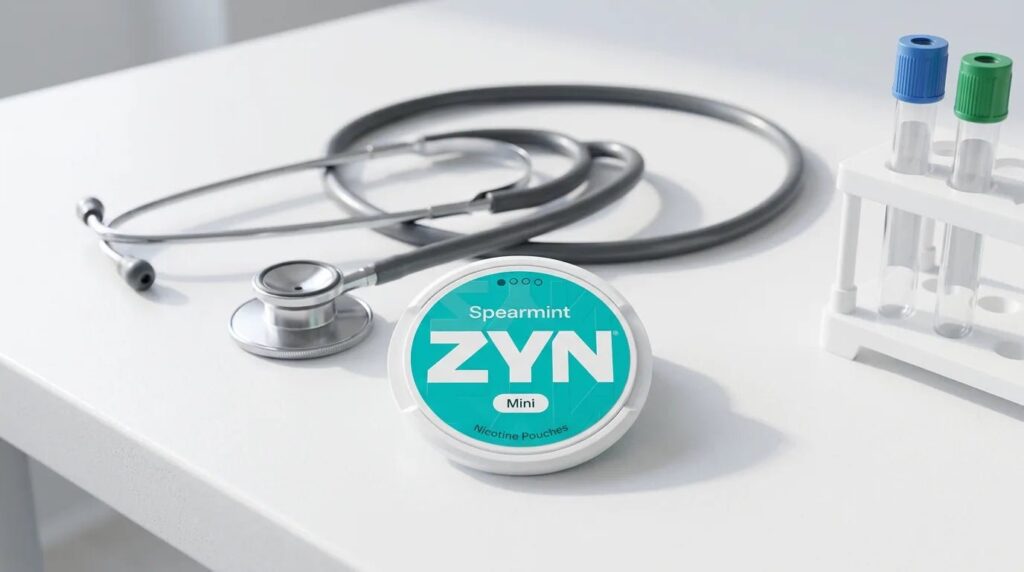
Does nicotine raise cholesterol? On its own, nicotine appears to have little effect: controlled trials of nicotine gum and patches found no meaningful change in blood lipids, while smoking raises triglycerides by about 9% and lowers HDL by about 6%. The picture for pouches is less settled, because a 2025 Swedish study found cholesterol actually rose slightly in the first month after regular users quit.
This guide, updated for November 2026, walks through what the research says, where the gaps are, and what that means if you use ZYN Spearmint Mini 1.5mg, VELO, LOOP or any other pouch. It is general information, not medical advice. If you have high cholesterol or heart disease, speak to your doctor.
Key Takeaways
- Nicotine alone: nicotine gum, patches and nasal spray showed little or no effect on cholesterol in controlled studies.
- Smoking is different: smokers have higher triglycerides and lower HDL, and HDL improves within weeks of quitting cigarettes.
- Pouch data is thin: there is no long-term study on nicotine pouches and cholesterol yet.
- 2025 Swedish study: 37 regular snus and pouch users who quit saw total cholesterol rise by 0.22 mmol/L at four weeks, with no significant difference by week 12.
- Get tested: high cholesterol has no symptoms, so a blood test is the only way to know your numbers.
What is cholesterol and why does it matter?
Cholesterol is a fatty substance carried in your blood by two main types of lipoprotein. According to the CDC, LDL (“bad” cholesterol) raises your risk of heart disease and stroke when levels are high, while HDL (“good” cholesterol) carries cholesterol back to the liver to be removed.
Triglycerides are another type of blood fat that is usually measured in the same test. The NHS says a healthy total cholesterol is below 5 mmol/L, non-HDL below 4 mmol/L, and HDL above 1.0 mmol/L for men and 1.2 mmol/L for women.
The NHS lists smoking, fatty food, lack of exercise, being overweight and drinking alcohol as common causes of high cholesterol. It can also run in families. Nicotine on its own is not on that list.
Does nicotine raise cholesterol on its own?
Most controlled studies say no, or only very slightly. A major review in the Journal of the American College of Cardiology by Benowitz and Gourlay (1997) concluded that nicotine given as gum, patches or other replacement products does not appear to harm lipid profiles.
The examples they cite are clear. Healthy non-smokers chewed 2 mg nicotine gum eight times a day for two weeks, with no change in triglycerides, total cholesterol, HDL or LDL. Non-smokers given a 15 mg patch daily for 12 weeks also showed no change in blood lipids.
Studies of smokers switching to nicotine replacement point the same way:
- A three-month nasal spray trial found that nicotine did not stop the healthy lipid changes that happened when people quit smoking, including LDL falling from 4.00 to 3.54 mmol/L.
- A patch trial found HDL rose and LDL fell in people who stayed off cigarettes while using 7, 14 or 21 mg patches.
In theory, nicotine releases adrenaline, which breaks stored fat into free fatty acids. A 2016 review notes this could raise LDL and lower HDL, but the trials above found no meaningful change.
Why does smoking raise cholesterol but nicotine replacement does not?
Smoking delivers thousands of chemicals alongside nicotine, and it is the smoke, not the nicotine, that appears to drive most of the lipid damage. The CDC says smoking raises triglycerides and lowers HDL, and the CDC’s risk factor page adds that smoking damages blood vessels so they collect fatty deposits more easily.
The size of the effect is well documented. A BMJ analysis of 54 studies found that, compared with non-smokers, smokers had:
- 3.0% higher total cholesterol
- 9.1% higher triglycerides
- 1.7% higher LDL
- 5.7% lower HDL
Quitting cigarettes reverses some of this quickly. A review of cessation studies found HDL rises within three weeks of quitting. In a large US trial, people who quit smoking for a year gained 2.4 mg/dL of HDL (about 0.06 mmol/L), despite gaining more weight. The CDC lists this “rapid improvement” in HDL as a key benefit of quitting smoking.
Because nicotine replacement users kept getting nicotine but still saw these improvements, researchers concluded that smoke, not nicotine, is the main driver.
Do nicotine pouches raise cholesterol?
There is no long-term study on nicotine pouches and cholesterol yet, so nobody can give a definite answer. The best evidence comes from Swedish snus research and one small 2025 study that included pouch users.
The 2025 Swedish quitting study
Researchers at Linköping University published a study in the Harm Reduction Journal following 37 daily snus users for up to 12 weeks after they stopped. Twelve of them had been using tobacco-free nicotine pouches, and 33 stayed off pouches for the full 12 weeks.
The results surprised many readers:
- Total cholesterol rose from 4.79 to 5.01 mmol/L at week 4.
- HDL rose from 1.41 to 1.47 mmol/L at week 4.
- LDL and triglycerides did not change significantly.
- By week 12, the change in total cholesterol was no longer statistically significant.
The authors reported that the cholesterol rise was seen only in participants who had used nicotine pouches rather than tobacco pouches. They also found that body weight rose by 1.8 kg after quitting, which may play a part. The study was small, had no control group and was not randomised, so it cannot prove cause and effect.
What snus research shows
A study of 5,930 Swedish men from the Northern Sweden MONICA surveys found snus users had slightly higher HDL and triglycerides than non-tobacco users, but no difference in non-HDL cholesterol. Compared with smokers, snus users had HDL that was 0.04 mmol/L higher and triglycerides 0.17 mmol/L lower.
Heavier snus use did not mean worse lipids, and stopping snus did not improve them. The authors said this questions whether the link is causal. A Swedish birth cohort study of more than 2,000 young adults also found no link between snus and the triglyceride-to-HDL ratio, though it did find links with higher BMI in women.
How do the numbers compare?
We converted the main findings into the same units so you can compare them side by side. To turn cholesterol from mmol/L into mg/dL, multiply by 38.67.
| Study | Who | Total cholesterol | HDL | Triglycerides |
|---|---|---|---|---|
| BMJ 1989 (54 studies) | Smokers vs non-smokers | +3.0% | -5.7% | +9.1% |
| JACC 1997 review | Nicotine gum, non-smokers | No change | No change | No change |
| Am Heart J 2011 | Smokers who quit for 1 year | LDL unchanged | +0.06 mmol/L | Not reported here |
| Harm Reduct J 2025 | Pouch and snus users who quit, week 4 | +0.22 mmol/L (+4.6%) | +0.06 mmol/L (+4.3%) | Not significant |
| Scand J Clin Lab Invest 2023 | Snus users vs smokers | Not reported | +0.04 mmol/L | -0.17 mmol/L |
Our own calculation from the 2025 data shows two things worth noting:
- The 0.22 mmol/L rise equals about 8.5 mg/dL, and it took the group average from 4.79 mmol/L to 5.01 mmol/L, just over the NHS “below 5” line.
- The HDL rise of 0.06 mmol/L after quitting pouches was almost the same size as the 0.06 mmol/L HDL gain seen after quitting cigarettes in the 2011 US trial. The studies were designed differently, so this is a rough comparison, not a direct match.
The same study also showed how much less nicotine pouch users took in. Median daily intake was 64 mg for nicotine-pouch users against 155 mg for tobacco-pouch users, so the tobacco-pouch group took in about 2.4 times more.
What are people saying on Reddit?
Cholesterol is a common worry in online communities. In threads such as “Zyn and Cholesterol” on r/Cholesterol and “Crazy high cholesterol” on r/QuittingZyn, users share blood test results that went up while using pouches or down after quitting.
These stories are not evidence. Diet, weight, alcohol, genetics and fasting all change cholesterol readings, and one result tells you little. If your numbers worry you, get a repeat test and talk to your doctor.
What should pouch users do about cholesterol?
The most useful step is to know your numbers, because high cholesterol has no symptoms. MedlinePlus notes that the main levers are diet, weight, exercise and not smoking.
- Get a blood test: ask your GP or pharmacy for a lipid panel, and tell them you use nicotine.
- Track over time: compare results taken under the same conditions, such as the same time of day and the same fasting rules.
- Look at the big drivers: saturated fat, alcohol, activity and weight usually matter more than pouch use.
- Use the lowest strength that works: nicotine is addictive and raises heart rate, so less is a sensible goal.
- Talk to your doctor: especially if you have heart disease, diabetes or a family history of high cholesterol.
For more on how nicotine affects the heart, read our guides to nicotine pouches and blood pressure, heart rate effects and blood sugar. If you want to step down, our step-down guide shows how.
Which low-strength pouches are available?
If you are cutting down your nicotine, lighter pouches make the step easier. These are all in stock in November 2026:
- ZYN Spearmint Mini 1.5mg (€4.99): the lightest ZYN we stock
- ZYN Spearmint Mini 3mg (€4.99): small, dry and gentle
- ZYN Apple Mint Mini 3mg (€4.99): a fruity mint mini
- Helwit Banana Slim 3.5mg (€5.45): a light fruit option
Browse all light nicotine pouches, or the full ZYN, VELO, LOOP, XQS, KUMA, ZEUS and C.R.E.A.M ranges. Nicotine pouches are for adults who already use nicotine.
FAQ: Nicotine and Cholesterol
Do nicotine pouches raise cholesterol?
There is no long-term study on nicotine pouches and cholesterol yet. Controlled studies of nicotine gum and patches found little or no change in blood lipids. A small 2025 Swedish study of 37 regular snus and pouch users found total cholesterol rose by 0.22 mmol/L four weeks after they stopped, so quitting did not produce an immediate drop.
Does ZYN raise LDL cholesterol?
No study has measured LDL in ZYN users specifically. In the 2025 Swedish study, LDL did not change significantly after people quit tobacco or nicotine pouches, and a review in the Journal of the American College of Cardiology found nicotine gum did not change LDL in healthy non-smokers over two weeks.
Will my cholesterol go down if I quit nicotine pouches?
Not necessarily. Studies show HDL (‘good’ cholesterol) rises quickly when smokers quit, but that effect is linked to smoke rather than nicotine. In regular pouch users who quit, total cholesterol was slightly higher after four weeks and back to no significant difference at 12 weeks.
Can I use a nicotine pouch before a cholesterol blood test?
Ask the clinic that is doing your test, because instructions vary. If you are asked to fast, follow their exact rules, and tell the clinician that you use nicotine so they can read your results in context.
Is smoking worse for cholesterol than nicotine pouches?
The evidence points that way. A BMJ analysis of 54 studies found smokers had 9.1% higher triglycerides and 5.7% lower HDL than non-smokers, while a study of 5,930 Swedish men found snus users had higher HDL and lower triglycerides than smokers. No nicotine product is free of risk.
Final Thoughts
So, does nicotine raise cholesterol? Decades of research on gum, patches and nasal spray suggest nicotine itself has little effect, and that smoke is what drives most of the damage seen in smokers. Pouch-specific evidence is still thin, though, and one small 2025 study found cholesterol did not fall straight after people quit. The sensible move is to get your lipids checked, focus on diet and activity, and use the lowest strength that works for you.
If you are stepping down, start with ZYN Spearmint Mini 1.5mg or another light pouch. Get free shipping on orders over €99, and sign up to our newsletter to get 10% off your first order, with the code sent by email.
]]>Ready to shop at outlet prices?
Duties & taxes included · free shipping over €99